The art of monster vocal synthesis has evolved dramatically in recent years, blending cutting-edge technology with creative sound design to bring terrifying creatures to life. What began as simple pitch-shifted animal noises has transformed into a sophisticated field combining biomechanics, digital signal processing, and performance capture. Modern sound designers now have an arsenal of tools at their disposal to create unique, believable creature vocals that would have been impossible to achieve just a decade ago.
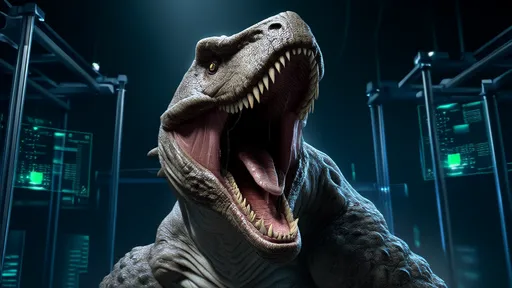
The foundation of monster vocal synthesis lies in understanding real-world biological systems. Sound designers study everything from alligator infrasound vibrations to how bats modulate their echolocation clicks. This biological authenticity provides the crucial scaffolding for fantastical elements. For instance, the iconic roar of a certain prehistoric reptile in Jurassic Park wasn't just a tiger's roar slowed down - it incorporated baby elephant trumpets, alligator growls, and even the sound of water dripping through a straw into a bucket of water. These layered elements created something familiar yet distinctly otherworldly.
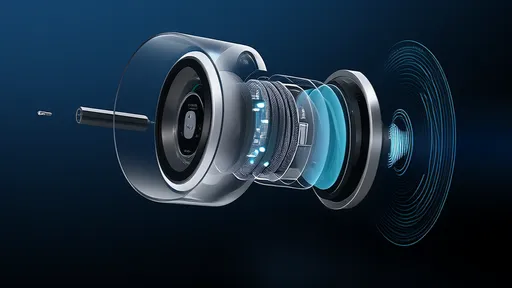
Recent breakthroughs in vocal tract modeling have revolutionized the field. Using MRI scans of animal vocal anatomy combined with fluid dynamics simulations, sound engineers can now predict how hypothetical creatures might produce sound. This goes far beyond simple pitch and tone manipulation - it allows for the creation of entirely new vocal mechanisms. Imagine a creature with three sets of vocal cords or a resonating chamber in its chest; these systems can now be modeled with surprising accuracy. The results are creature vocals that follow believable biological rules while still sounding alien and terrifying.
Performance capture has become another game-changer in monster vocal synthesis. Where sound designers once worked purely in post-production, many now collaborate with voice actors during principal photography. Specialized motion capture suits can track an actor's facial muscles, throat vibrations, and even breathing patterns. This data then informs the digital synthesis process, preserving the raw emotional intensity of a human performance while transforming it into something monstrous. The best modern creature vocals maintain this crucial human element - you can still sense the intention and emotion behind the roar.
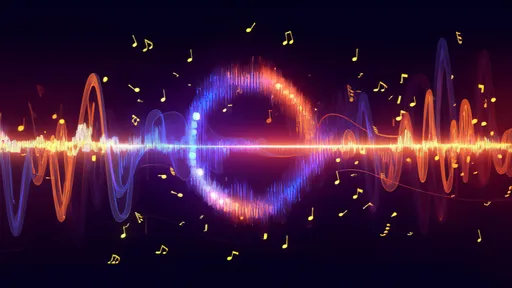
The technical process typically begins with extensive voice recording sessions. Actors might perform dozens of variations of growls, screams, and other vocalizations. These recordings then undergo spectral analysis to identify unique frequency components that can be enhanced or manipulated. Advanced granular synthesis techniques allow designers to stretch, compress, and rearrange these vocal fragments while preserving their organic quality. The human ear is remarkably sensitive to artificial-sounding vocals, so maintaining subtle imperfections and natural variations is crucial for suspension of disbelief.
One of the most exciting developments has been the application of machine learning to monster vocal synthesis. Neural networks can analyze thousands of animal vocalizations and human speech patterns to generate entirely new sounds that follow biological and acoustic rules. These AI systems don't just copy existing sounds - they can create novel vocalizations for imaginary creatures based on parameters like size, habitat, and evolutionary traits. When combined with human oversight and creative direction, these tools have produced some of the most unique creature vocals in recent memory.
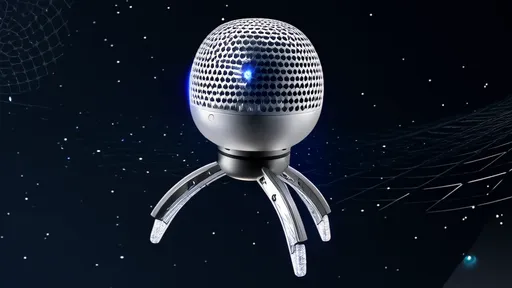
The future of monster vocal synthesis points toward even more immersive experiences. Spatial audio technologies allow creature vocals to move realistically through 3D environments, with accurate Doppler effects and environment-specific reverberation. Some studios are experimenting with subharmonic synthesis to create vibrations that are felt as much as heard, playing on humanity's primal fear of infrasound. There's also growing interest in interactive vocal systems for games, where creature vocals adapt in real-time based on player actions and environmental factors.
As the technology advances, ethical considerations have emerged regarding the use of animal recordings. Many sound designers now advocate for synthetic approaches over using distressed animal sounds, both for ethical reasons and because synthetic vocals often provide more creative control. This shift has led to unexpected collaborations between sound engineers and biologists, working together to understand animal vocalization well enough to recreate it digitally without harming actual creatures.
The monster vocal synthesis field continues to push boundaries between science and art. What makes these synthetic vocals so effective isn't just their technical sophistication, but how they tap into deep-seated human instincts. A well-designed creature vocal can trigger our fight-or-flight response before we've even seen the monster on screen. As the tools grow more advanced, the focus remains on serving the story - using technology to create vocals that feel authentic within their fictional worlds while delivering maximum emotional impact.

By /Aug 7, 2025
By /Aug 7, 2025
By /Aug 7, 2025
By /Aug 7, 2025

By /Aug 7, 2025

By /Aug 7, 2025

By /Aug 7, 2025

By /Aug 7, 2025
By /Aug 7, 2025

By /Aug 7, 2025
By /Aug 7, 2025
By /Aug 7, 2025
By /Aug 7, 2025
By /Aug 7, 2025
By /Aug 7, 2025
By /Aug 7, 2025

By /Aug 7, 2025
By /Aug 7, 2025
By /Aug 7, 2025
By /Aug 7, 2025
