The rapid proliferation of voice-controlled devices and virtual assistants has brought noise reduction technologies to the forefront of audio processing innovation. As consumers increasingly rely on voice commands in noisy environments – from crowded kitchens to bustling city streets – engineers are developing sophisticated solutions to ensure accurate speech recognition.
Environmental noise poses the most significant challenge to reliable voice command systems. Traditional noise reduction approaches often struggle with non-stationary sounds like clattering dishes, traffic noise, or overlapping conversations. These unpredictable audio interferences frequently cause virtual assistants to misinterpret commands or fail to activate altogether.
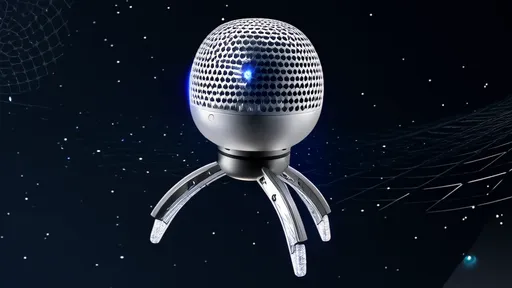
Modern solutions employ multi-microphone arrays combined with advanced beamforming algorithms to isolate the user's voice from background noise. By analyzing sound wave patterns and time delays across multiple microphones, these systems can effectively create an "acoustic spotlight" that follows the speaker while suppressing other noise sources. This technology has become particularly sophisticated in smart speakers and automotive voice control systems.
Deep learning has revolutionized noise suppression for voice commands in recent years. Neural networks trained on thousands of hours of noisy speech samples can now distinguish between human voices and background noise with remarkable accuracy. Unlike traditional signal processing techniques, these AI-powered systems adapt in real-time to changing noise environments, maintaining consistent performance whether the user is whispering in a quiet room or shouting over construction noise.
The latest generation of noise reduction solutions goes beyond simple suppression – they actually reconstruct clean speech signals from noisy inputs. Using spectral mapping techniques, these systems can fill in gaps where noise has obscured speech components, effectively "guessing" what the user probably said based on contextual clues and phonetic patterns. This approach has shown particular promise for voice commands in vehicles, where road and wind noise traditionally degraded performance.
Personalization represents another frontier in voice command noise reduction. Systems that learn individual users' voice characteristics, speech patterns, and even frequently used phrases can maintain higher accuracy in noisy conditions. Some cutting-edge solutions now combine speaker identification with noise suppression, automatically adjusting parameters when recognizing a particular family member's voice.
Edge computing has enabled significant advancements in real-time noise reduction for voice commands. By processing audio locally on devices rather than sending raw recordings to the cloud, these solutions achieve near-instant response times while preserving privacy. This local processing capability has become particularly important for always-listening devices that need to respond immediately to wake words despite environmental noise.
The integration of visual cues represents an emerging trend in voice command noise reduction. Some systems now combine audio processing with camera inputs, using facial recognition and lip movement analysis to verify speech commands. This multimodal approach can dramatically improve reliability in extremely noisy environments where audio-only systems might fail.
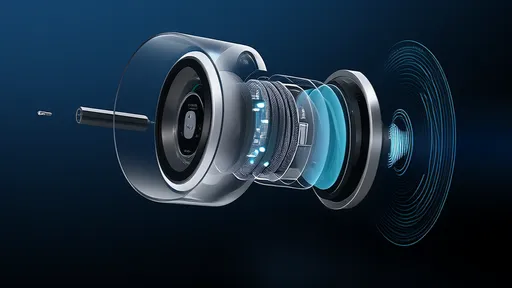
Microphone technology continues to evolve to support better noise reduction. Directional MEMS microphones with improved signal-to-noise ratios, combined with innovative physical designs that minimize wind and handling noise, provide cleaner audio inputs for processing algorithms. Some manufacturers are experimenting with microphone placements that leverage natural sound shadowing from device housings to passively reduce certain types of noise.
Looking ahead, researchers are developing context-aware noise reduction systems that understand the user's environment and adapt accordingly. By accessing calendar data, location information, and even smart home sensor inputs, these future systems will automatically optimize their noise suppression profiles for specific situations – knowing whether the user is likely in a car, at a party, or walking down a busy street.
The business implications of reliable voice command noise reduction are significant. As error rates decrease and user confidence grows, voice interfaces are becoming viable for more critical applications – from medical dictation to industrial control systems. This reliability breakthrough is driving adoption across sectors that previously avoided voice technology due to accuracy concerns in noisy environments.
Privacy considerations remain paramount in noise reduction development. While cloud-based processing offers more computational power, consumers increasingly demand on-device solutions that don't transmit their voice data externally. This has led to specialized neural network architectures optimized to run efficiently on local hardware while still delivering professional-grade noise reduction.
Standardization efforts are underway to establish benchmarks for voice command performance in noisy conditions. These metrics will help consumers compare products and push manufacturers to continuously improve their noise reduction capabilities. Current testing protocols evaluate systems across various noise types and signal-to-noise ratios to simulate real-world conditions.
The arms race in voice command noise reduction shows no signs of slowing. As virtual assistants become more sophisticated and voice interfaces expand into new domains, the demand for flawless performance in any acoustic environment will only intensify. What began as simple echo cancellation has evolved into one of the most technically challenging and commercially valuable areas of audio engineering today.
For consumers, these advancements mean voice commands that simply work – whether they're adjusting their smart thermostat while vacuuming or asking their car for directions with the windows down. This reliability is quietly transforming voice interfaces from a novelty to an indispensable feature across countless devices and applications.

By /Aug 7, 2025

By /Aug 7, 2025

By /Aug 7, 2025

By /Aug 7, 2025

By /Aug 7, 2025

By /Aug 7, 2025

By /Aug 7, 2025

By /Aug 7, 2025
By /Aug 7, 2025

By /Aug 7, 2025
By /Aug 7, 2025

By /Aug 7, 2025
By /Aug 7, 2025
By /Aug 7, 2025

By /Aug 7, 2025

By /Aug 7, 2025

By /Aug 7, 2025

By /Aug 7, 2025

By /Aug 7, 2025

By /Aug 7, 2025
