3D Haptic Modeling with Ultrasound

Aug 7, 2025 By

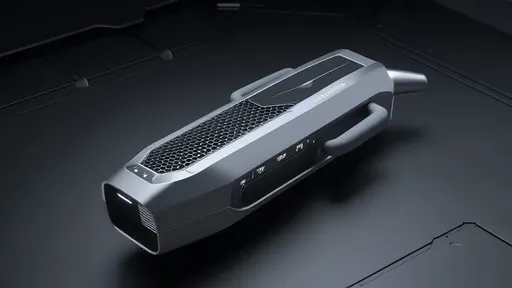
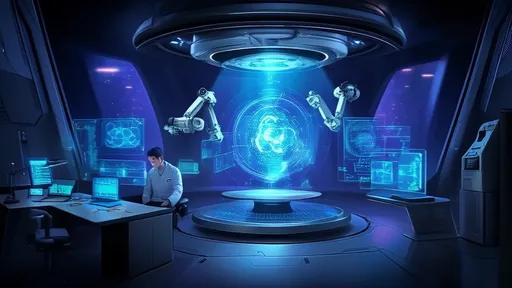
The realm of haptic technology has taken a significant leap forward with the advent of ultrasound-based 3D modeling. This innovative approach combines the precision of ultrasound with the tactile feedback of haptics, creating a system that allows users to not only see but also feel virtual objects in three-dimensional space. The implications of this technology span across multiple industries, from medical simulations to virtual prototyping, offering a more immersive and interactive experience than ever before.

At its core, ultrasound haptic 3D modeling utilizes focused ultrasound waves to generate tactile sensations in mid-air. By carefully controlling the phase and amplitude of these waves, researchers have been able to create pressure points that mimic the sensation of touching physical objects. Unlike traditional haptic feedback systems that rely on gloves or wearable devices, this method is entirely contactless, opening up new possibilities for applications where hygiene or freedom of movement is crucial.

The Science Behind the Sensation

The breakthrough lies in the precise manipulation of acoustic radiation force. When ultrasound waves converge at a specific point in space, they create a small but perceptible pressure on the skin. By rapidly moving these focal points, the system can simulate textures, shapes, and even the resistance of virtual objects. This requires sophisticated algorithms capable of calculating the interference patterns of hundreds of ultrasonic transducers in real-time, a computational challenge that has only recently become feasible with modern processing power.

What makes this technology particularly remarkable is its ability to project tactile sensations onto bare skin without any intermediary device. Users can reach out and feel virtual buttons, sense the contours of digital models, or experience the weight of nonexistent objects—all while their hands remain completely free. This level of interaction blurs the line between the physical and digital worlds in ways that were previously the domain of science fiction.

Applications Transforming Industries

In medical training, ultrasound haptic 3D modeling is revolutionizing how practitioners learn complex procedures. Surgeons can now practice delicate operations by feeling virtual tissues with realistic resistance and texture, significantly enhancing the quality of simulation-based education. The technology's ability to recreate the subtle tactile differences between healthy and diseased tissue could lead to better-trained medical professionals and improved patient outcomes.

The automotive and product design sectors are equally excited about the potential of this technology. Designers can interact with 3D models of new vehicles or consumer products, feeling the curves and surfaces as if they were physical prototypes. This tactile dimension to computer-aided design could dramatically reduce development time and costs by allowing for more intuitive evaluation of ergonomics and aesthetics before physical manufacturing begins.

Challenges and Future Directions

Despite its promise, ultrasound haptic 3D modeling faces several technical hurdles. The current generation of systems struggles with creating sensations over large areas or delivering consistent feedback to multiple fingers simultaneously. There are also limitations in the range of textures and forces that can be convincingly reproduced. Researchers are actively working to overcome these challenges through improved transducer arrays and more advanced wave interference algorithms.

Another area of development focuses on combining the tactile feedback with visual augmented reality systems. The ultimate goal is to create seamless mixed-reality environments where users can see and touch virtual objects that appear anchored in physical space. Such systems would have profound implications for fields ranging from teleoperation to entertainment, potentially changing how we interact with digital content in our daily lives.

As the technology matures, we can expect to see ultrasound haptic systems become more compact, affordable, and capable. Current prototypes already demonstrate the potential for integration into consumer devices, suggesting a future where tactile feedback is as commonplace in our digital interactions as visual and auditory elements are today. The journey from laboratory curiosity to mainstream technology may be shorter than we imagine.

The Human Factor in Technological Evolution

What makes ultrasound haptic 3D modeling particularly exciting is how it addresses fundamental aspects of human perception. Touch is our most intimate sense, deeply connected to how we understand and interact with the world. By incorporating tactile feedback into digital interfaces, we're not just adding another sensory channel—we're creating more natural, intuitive ways for humans to communicate with machines.

This technology also raises interesting questions about the nature of reality in an increasingly digital world. As virtual sensations become indistinguishable from physical ones, our very understanding of what constitutes a "real" experience may need to evolve. The psychological and philosophical implications of such advanced haptic systems warrant as much consideration as their technical specifications.

The development of ultrasound haptic 3D modeling represents more than just another step in interface technology—it's a paradigm shift in how we conceive the relationship between humans and digital information. As researchers continue to refine the technology and explore its applications, we stand on the brink of a new era of multisensory computing that could redefine everything from entertainment to education to professional training.
Recommend Posts
IT

3D Haptic Modeling with Ultrasound

By /Aug 7, 2025

The realm of haptic technology has taken a significant leap forward with the advent of ultrasound-based 3D modeling. This innovative approach combines the precision of ultrasound with the tactile feedback of haptics, creating a system that allows users to not only see but also feel virtual objects in three-dimensional space. The implications of this technology span across multiple industries, from medical simulations to virtual prototyping, offering a more immersive and interactive experience than ever before.
IT

Energy Saving through Multi-Device Context Awareness

By /Aug 7, 2025

The concept of multi-device context-aware energy efficiency is rapidly gaining traction in the tech industry as a viable solution to reduce power consumption without compromising user experience. With the proliferation of smart devices in households and workplaces, the need for intelligent energy management has never been more pressing. Unlike traditional energy-saving methods that focus on individual devices, this approach considers the broader ecosystem of interconnected gadgets, optimizing power usage based on real-time contextual data.
IT

Electromyography-based Hand Gesture Fatigue Detection

By /Aug 7, 2025

The field of human-computer interaction has witnessed remarkable advancements in recent years, with electromyography (EMG)-based gesture recognition emerging as a particularly promising area. Among the various applications of this technology, fatigue detection during gesture-based interactions has garnered significant attention from researchers and industry professionals alike. As our reliance on gesture-controlled systems grows across industries ranging from gaming to medical rehabilitation, understanding and mitigating the effects of muscle fatigue becomes increasingly crucial.
IT

Brain-Computer Interface Neurofeedback Training

By /Aug 7, 2025

The field of neurotechnology has taken a revolutionary leap forward with the rapid advancement of brain-computer interface (BCI) systems capable of facilitating direct communication between the human brain and external devices. Among the most promising applications of this technology is neurofeedback training - a therapeutic approach that empowers individuals to consciously modulate their brain activity through real-time feedback.
IT

Holographic Display Dynamic Focusing Technology

By /Aug 7, 2025

The realm of display technology has witnessed a paradigm shift with the advent of holographic displays, and among the most groundbreaking advancements is the development of dynamic focusing techniques. This innovation promises to redefine how we interact with visual content, offering unprecedented depth and realism. Unlike traditional displays that rely on flat, two-dimensional imagery, holographic displays with dynamic focusing capabilities create a true volumetric experience, allowing viewers to perceive depth without the need for special glasses or cumbersome headgear.
IT

Optimization of Smart Contract Symbol Execution

By /Aug 7, 2025

The world of smart contracts has witnessed remarkable advancements in recent years, with symbolic execution emerging as a powerful technique for optimizing these self-executing agreements. As blockchain technology continues to mature, developers and researchers are increasingly focusing on improving the efficiency and security of smart contracts through sophisticated analysis methods.
IT

Physical Tamper-Resistant Design for PUFs

By /Aug 7, 2025

As the demand for secure hardware solutions grows, Physically Unclonable Functions (PUFs) have emerged as a cornerstone of modern cryptographic systems. Their inherent ability to generate unique, unpredictable identifiers based on microscopic manufacturing variations makes them ideal for authentication and key generation. However, the very nature of PUFs—relying on physical characteristics—also exposes them to sophisticated physical attacks. Recent advancements in anti-physical probing design aim to fortify PUFs against invasive and semi-invasive attacks while maintaining their reliability.
IT

Mining Ransomware Behavior Patterns

By /Aug 7, 2025

Ransomware has emerged as one of the most pervasive and financially damaging cyber threats in recent years. Unlike traditional malware, ransomware operates with a clear objective: to encrypt critical data and demand payment for its release. What makes ransomware particularly dangerous is its ability to adapt and evolve, leveraging new techniques to bypass security measures. Security researchers and threat analysts have been closely monitoring these behavioral patterns to develop effective countermeasures.
IT

Concurrent Vulnerabilities in Memory-Safe Languages

By /Aug 7, 2025

Memory-safe languages like Rust, Go, and Swift have gained immense popularity in recent years by eliminating entire classes of vulnerabilities that plague traditional languages like C and C++. Their compile-time checks and runtime guards prevent buffer overflows, null pointer dereferences, and other memory-related bugs that account for nearly 70% of critical vulnerabilities in software. However, as developers increasingly rely on these languages for building complex concurrent systems, a disturbing trend has emerged - memory safety doesn't automatically translate to concurrency safety.
IT

AI Adversarial Sample Detection Engine

By /Aug 7, 2025

The rapid advancement of artificial intelligence has brought both unprecedented opportunities and new challenges in cybersecurity. Among these challenges, adversarial attacks against AI systems have emerged as a critical threat. These attacks involve carefully crafted inputs designed to deceive machine learning models, causing them to make incorrect predictions or classifications. As AI becomes more deeply integrated into security systems, financial platforms, and autonomous technologies, the need for robust adversarial sample detection engines has never been more urgent.
IT

Accelerating Quantum Program Simulation with Classical Methods

By /Aug 7, 2025

The field of quantum computing has long been heralded as the next frontier in computational power, promising to solve problems that are currently intractable for classical computers. However, one of the significant challenges in this domain is the simulation of quantum programs on classical hardware. As quantum systems grow in complexity, the resources required to simulate them increase exponentially, creating a bottleneck for researchers and developers. Recent advancements in classical simulation acceleration techniques are beginning to address this issue, offering new hope for more efficient quantum program development and testing.
IT

Intelligent Root Cause Analysis of Chaos Engineering

By /Aug 7, 2025

The marriage of chaos engineering and artificial intelligence is quietly revolutionizing how organizations diagnose system failures. As distributed systems grow increasingly complex, traditional root cause analysis methods are struggling to keep pace with the velocity of modern deployments. Enter intelligent root cause localization - an emerging discipline that combines the proactive failure injection of chaos engineering with machine learning's pattern recognition capabilities.
IT

Asynchronous Microservice Causality Logs

By /Aug 7, 2025

The distributed systems landscape has undergone radical transformation in the past decade, with asynchronous microservices emerging as the dominant architectural pattern for scalable cloud-native applications. This shift from monolithic systems to event-driven, loosely coupled services has introduced new complexities in observability, particularly around tracing causal relationships across service boundaries. Traditional logging approaches, designed for synchronous call chains, prove inadequate in this new paradigm where events propagate through message queues and event buses without direct coupling between producers and consumers.
IT

Please provide the title you would like to have translated into English.

By /Aug 7, 2025

The landscape of software development is undergoing a quiet revolution as natural language processing (NLP) converges with application programming interfaces (APIs). What was once the domain of developers writing precise lines of code is now becoming accessible through conversational language. This shift promises to democratize programming while simultaneously raising important questions about precision, security, and the future of technical work.
IT

Breaking Through the WebAssembly Security Sandbox

By /Aug 7, 2025

The security implications of WebAssembly have been a topic of intense scrutiny since its inception. Designed as a portable binary instruction format for stack-based virtual machines, WebAssembly (often abbreviated as Wasm) promised near-native performance while maintaining strong isolation within the browser sandbox. However, recent developments have shown that this isolation isn't as impenetrable as initially believed.
IT

Noise Reduction in Electronic Skin Biosensors

By /Aug 7, 2025

The field of wearable technology has taken a significant leap forward with the development of electronic skin (e-skin) capable of capturing high-fidelity biosignals. Unlike traditional medical sensors, e-skin adheres seamlessly to the body, offering continuous monitoring of vital physiological data such as heart rate, muscle activity, and even neural signals. However, one persistent challenge has been the interference of noise—whether from motion artifacts, environmental factors, or internal electronic fluctuations—which can distort these delicate signals. Recent advancements in noise reduction algorithms and material engineering are now addressing this issue head-on, paving the way for more reliable and clinically viable applications.
IT

Ocean Sensor Energy Self-Harvesting

By /Aug 7, 2025

The vast expanse of the world's oceans remains one of the least explored frontiers on Earth, yet it holds critical answers to climate patterns, marine ecosystems, and even future energy solutions. Among the many technological challenges in oceanographic research, powering remote sensors has long been a bottleneck. Traditional battery-powered systems face limitations in lifespan and environmental impact, prompting scientists and engineers to explore innovative energy harvesting methods that allow sensors to sustain themselves indefinitely.
IT

Blockchain Settlement for Virtual Power Plant

By /Aug 7, 2025

The energy sector is undergoing a radical transformation, driven by the convergence of decentralized power generation and cutting-edge digital technologies. At the heart of this revolution lies the concept of virtual power plants (VPPs), which are now being supercharged by blockchain-based settlement systems. This fusion promises to redefine how electricity is traded, managed, and monetized in an increasingly complex grid environment.
IT

Digital Twin-based Fault Simulation in Power Distribution Networks

By /Aug 7, 2025

The energy sector is undergoing a transformative shift with the integration of digital twin technology into power grid management. As electricity networks grow increasingly complex, traditional methods of fault simulation and response planning are proving inadequate. Digital twins—virtual replicas of physical systems that update in real-time—are emerging as a game-changing solution for predicting, analyzing, and mitigating power grid failures before they occur in the physical world.
IT

Millimeter Wave Radar Positioning for Underground Equipment

By /Aug 7, 2025

The mining industry has long grappled with the challenge of accurately tracking and positioning equipment deep underground. Traditional methods, such as RFID or ultrasonic sensors, often fall short in the harsh and complex environments of subterranean operations. However, the emergence of millimeter-wave (mmWave) radar technology is poised to revolutionize this space, offering unprecedented precision and reliability for underground asset localization.