The field of human-computer interaction has witnessed remarkable advancements in recent years, with electromyography (EMG)-based gesture recognition emerging as a particularly promising area. Among the various applications of this technology, fatigue detection during gesture-based interactions has garnered significant attention from researchers and industry professionals alike. As our reliance on gesture-controlled systems grows across industries ranging from gaming to medical rehabilitation, understanding and mitigating the effects of muscle fatigue becomes increasingly crucial.
Muscle fatigue during prolonged gesture use presents a substantial challenge to the reliability of EMG-based systems. When users perform repetitive motions or maintain static poses for extended periods, their muscles gradually lose the ability to generate force efficiently. This physiological phenomenon manifests in the EMG signals as distinct changes in amplitude and frequency characteristics. Researchers have observed that as fatigue sets in, the median frequency of the EMG signal typically decreases while the amplitude often increases. These measurable changes provide the foundation for developing robust fatigue detection algorithms.
The implications of effective fatigue detection extend far beyond academic interest. In industrial settings where workers operate machinery through gesture controls, fatigue monitoring could prevent accidents caused by delayed or imprecise movements. Similarly, in physical rehabilitation, therapists could use fatigue data to optimize exercise regimens for patients recovering from injuries. Even in the consumer electronics space, gaming consoles and virtual reality systems could benefit from adaptive interfaces that respond to users' physical states.
Developing accurate fatigue detection models requires overcoming several technical challenges. The variability between individuals' muscle physiology means that systems often need personalized calibration. Factors such as skin impedance, subcutaneous fat levels, and muscle composition can all affect EMG signal quality. Additionally, the placement of electrodes significantly influences the reliability of fatigue measurements. Researchers are exploring various machine learning approaches to create models that can generalize across diverse populations while maintaining sensitivity to individual fatigue patterns.
Recent studies have demonstrated promising results using deep learning architectures for fatigue classification. Convolutional neural networks, in particular, have shown an ability to extract relevant features from raw EMG signals without extensive preprocessing. These models can identify subtle patterns that correlate with different stages of muscle fatigue, enabling more nuanced detection than traditional threshold-based methods. However, the computational demands of such approaches present challenges for real-time implementation on embedded systems.
Signal processing techniques play an equally important role in fatigue detection systems. Advanced filtering methods help isolate muscle activity from noise artifacts caused by movement or electrical interference. Time-frequency analysis tools like wavelet transforms have proven particularly effective for examining how EMG signal characteristics evolve during prolonged use. By combining these processing techniques with machine learning classifiers, researchers are developing systems that can detect fatigue with increasing accuracy.
The practical implementation of EMG-based fatigue detection faces several hurdles. Power consumption remains a significant concern for wearable applications, as continuous EMG monitoring can drain battery life quickly. Researchers are investigating compressed sensing techniques and adaptive sampling strategies to reduce energy usage without sacrificing detection accuracy. Another challenge involves creating intuitive feedback mechanisms that alert users to fatigue without disrupting their primary tasks.
User interface design represents another critical aspect of fatigue detection systems. Effective systems must present fatigue information in ways that users can interpret and act upon quickly. Some prototypes use visual indicators like color-changing LED arrays, while others employ haptic feedback to signal increasing fatigue levels. The choice of feedback modality often depends on the specific application context and user requirements.
As the technology matures, ethical considerations surrounding EMG-based fatigue monitoring are coming to the forefront. Workplace implementations raise questions about employee privacy and the potential misuse of physiological data. Clear policies and transparent data handling practices will be essential for gaining user acceptance. At the same time, the healthcare applications of this technology could significantly improve quality of life for many patients, creating a compelling case for continued development.
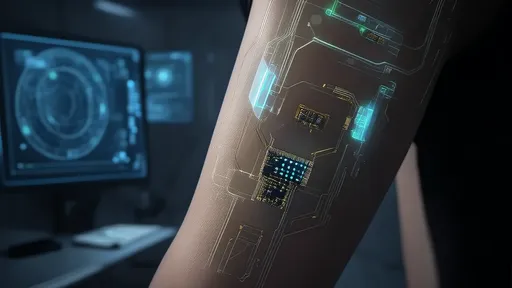
The future of EMG-based gesture fatigue detection appears bright, with several emerging trends shaping the field. The integration of additional sensor modalities, such as inertial measurement units and force sensors, could provide more comprehensive fatigue assessments. Edge computing capabilities are enabling more sophisticated processing to occur directly on wearable devices rather than requiring cloud connectivity. Meanwhile, advances in flexible electronics are leading to more comfortable electrode designs that users can wear for extended periods.
Standardization efforts will play a crucial role in the widespread adoption of this technology. Currently, the lack of uniform protocols for data collection and fatigue assessment makes it difficult to compare results across studies. Industry groups and academic consortia are beginning to establish common frameworks that will facilitate technology transfer and commercialization. These standards will need to address not only technical specifications but also ethical guidelines for deployment.
Commercial applications of EMG fatigue detection are already beginning to emerge, particularly in specialized domains. Some medical device companies have incorporated basic fatigue monitoring into their rehabilitation systems, while a handful of industrial equipment manufacturers are testing similar features in their gesture-controlled interfaces. As the underlying algorithms become more refined and hardware costs decrease, broader consumer applications will likely follow.
The intersection of EMG-based gesture recognition and fatigue detection represents a fascinating convergence of physiology, signal processing, and human-computer interaction. While significant challenges remain, the potential benefits for user experience, safety, and health monitoring make this an area worthy of continued research and development. As our understanding of muscle fatigue patterns improves and our technical capabilities advance, we can expect to see increasingly sophisticated implementations across diverse application domains.
By /Aug 7, 2025

By /Aug 7, 2025

By /Aug 7, 2025
By /Aug 7, 2025
By /Aug 7, 2025
By /Aug 7, 2025
By /Aug 7, 2025

By /Aug 7, 2025

By /Aug 7, 2025

By /Aug 7, 2025
By /Aug 7, 2025

By /Aug 7, 2025

By /Aug 7, 2025

By /Aug 7, 2025

By /Aug 7, 2025
By /Aug 7, 2025

By /Aug 7, 2025

By /Aug 7, 2025
By /Aug 7, 2025

By /Aug 7, 2025
