The vast expanse of the world's oceans remains one of the least explored frontiers on Earth, yet it holds critical answers to climate patterns, marine ecosystems, and even future energy solutions. Among the many technological challenges in oceanographic research, powering remote sensors has long been a bottleneck. Traditional battery-powered systems face limitations in lifespan and environmental impact, prompting scientists and engineers to explore innovative energy harvesting methods that allow sensors to sustain themselves indefinitely.
Energy Harvesting Technologies for Marine Sensors
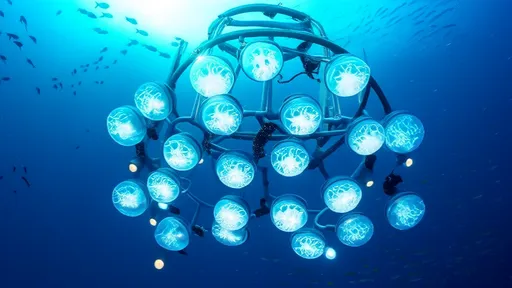
Ocean environments present unique opportunities for energy collection, leveraging the relentless motion of waves, temperature gradients, and even salinity differences. Wave energy converters, for instance, have seen significant advancements in miniaturization, allowing them to be integrated into sensor buoys without compromising their primary function. These devices capture the kinetic energy of ocean swells and convert it into electrical power through piezoelectric or electromagnetic mechanisms. Unlike early prototypes that were bulky and inefficient, modern iterations can generate sufficient power even in relatively calm seas.
Another promising approach involves thermal gradient harvesting. The ocean maintains a fairly stable temperature at depth while surface waters fluctuate with sunlight and weather. This differential can be exploited through thermoelectric generators that produce electricity from temperature variations. Recent field tests in the Pacific have demonstrated that such systems can reliably power basic sensor arrays for months without any supplemental energy sources.
Salinity gradient power, though less mature than other technologies, shows particular promise for sensors deployed in estuaries or coastal areas where freshwater meets saltwater. Through reverse electrodialysis, the chemical potential difference between these water masses can be converted into usable electricity. While current outputs remain modest, the continuous nature of this energy source makes it ideal for low-power marine observation devices.
Integration Challenges and Solutions
Implementing self-powered sensor systems isn't without hurdles. The corrosive marine environment demands exceptionally durable materials that can withstand years of saltwater exposure while maintaining energy harvesting efficiency. Researchers have made strides in developing protective nanocoatings that shield sensitive components without impeding energy collection mechanisms. These coatings, derived from advanced polymers and ceramic composites, have shown remarkable resilience in accelerated aging tests simulating decade-long deployments.
Energy storage presents another critical challenge. Unlike land-based systems that might use conventional batteries, marine applications require storage solutions that won't degrade in seawater or pose contamination risks. Supercapacitors have emerged as a leading solution, offering rapid charge/discharge cycles that pair well with the intermittent nature of ocean energy sources. When combined with small backup lithium-thin-film batteries for periods of exceptionally low energy harvest, these hybrid systems provide reliable operation through varying sea conditions.
The issue of energy intermittency has led to innovative power management approaches. Modern marine sensors now incorporate sophisticated algorithms that dynamically adjust their sampling rates and data transmission schedules based on available power reserves. During periods of abundant energy, sensors might increase their measurement frequency or process more complex data locally. When energy runs low, they switch to essential-only modes, ensuring continuous operation of critical monitoring functions.
Real-World Applications and Impacts
Autonomous sensor networks powered by ocean energy are already transforming marine research. The Ocean Energy-Powered Observatory Network in the North Atlantic, for example, consists of dozens of self-sustaining sensor nodes that monitor everything from water temperature to microplastic concentrations. Previously, maintaining such an array would require frequent ship visits to replace batteries - an expensive and environmentally taxing endeavor. Now, these stations operate independently, transmitting data via satellite links powered entirely by harvested energy.
Commercial fisheries are adopting similar technology to monitor marine conditions and track fish populations. Energy-harvesting sensors attached to fishing gear or deployed across fishing grounds provide real-time data on water conditions, helping optimize catch efforts while minimizing environmental impact. The tuna industry in the Pacific has reported significant reductions in fuel consumption and bycatch thanks to these smart, self-powered monitoring systems.
Perhaps most crucially, energy-autonomous sensors are enhancing our understanding of climate change. The Southern Ocean Carbon and Climate Observations and Modeling project deploys floats with salinity and temperature sensors that derive power from the very environment they study. By eliminating the need for battery replacements in these remote, ice-prone waters, scientists are gathering unprecedented long-term data on ocean carbon uptake - a vital factor in global climate models.
Future Directions and Innovations
Looking ahead, researchers are exploring even more sophisticated energy harvesting techniques. Bio-inspired designs that mimic how marine organisms extract energy from their environment show particular promise. Some prototypes incorporate artificial kelp structures that sway with currents to generate power, while others test microbial fuel cells that produce electricity from organic matter in seawater. Though still in early development, these biologically informed approaches could lead to sensors that harvest energy as naturally as the creatures they monitor.
Another exciting frontier involves combining multiple energy harvesting methods into single systems. Hybrid wave-thermal-solar harvesters could provide more consistent power output by compensating when one source diminishes. The European MARINET initiative recently tested a prototype that successfully maintained sensor operation through two weeks of calm seas by seamlessly switching between energy sources based on availability.
Energy harvesting technology is also enabling entirely new classes of marine sensors. Ultra-low-power processors and improved wireless communication protocols allow for smaller, more numerous sensor nodes that can form dense observation networks. Where traditional monitoring might rely on a few expensive, power-hungry instruments, future systems may deploy swarms of tiny, energy-autonomous sensors that collectively provide higher-resolution data with greater spatial coverage.
As these technologies mature, they promise to democratize ocean monitoring by reducing costs and eliminating maintenance barriers. Research institutions, coastal communities, and even citizen scientists could deploy and maintain sensor networks without specialized equipment or frequent access. This could lead to an explosion of marine data, fueling discoveries about ocean health, climate systems, and marine resources that we can scarcely imagine today.

By /Aug 7, 2025

By /Aug 7, 2025

By /Aug 7, 2025

By /Aug 7, 2025

By /Aug 7, 2025
By /Aug 7, 2025

By /Aug 7, 2025

By /Aug 7, 2025

By /Aug 7, 2025

By /Aug 7, 2025

By /Aug 7, 2025

By /Aug 7, 2025

By /Aug 7, 2025

By /Aug 7, 2025

By /Aug 7, 2025
By /Aug 7, 2025
By /Aug 7, 2025

By /Aug 7, 2025

By /Aug 7, 2025

By /Aug 7, 2025
