The field of neurotechnology has taken a revolutionary leap forward with the rapid advancement of brain-computer interface (BCI) systems capable of facilitating direct communication between the human brain and external devices. Among the most promising applications of this technology is neurofeedback training - a therapeutic approach that empowers individuals to consciously modulate their brain activity through real-time feedback.
Understanding the Fundamentals of BCI Neurofeedback
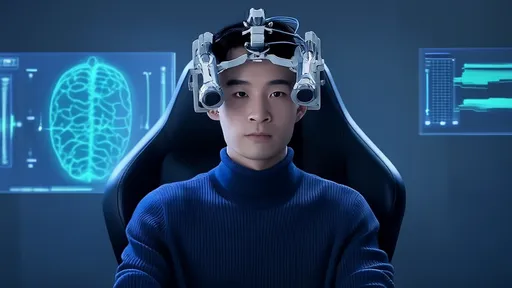
At its core, BCI neurofeedback training represents a sophisticated closed-loop system where brain signals are continuously monitored, processed, and presented back to the user in an interpretable format. Unlike traditional neurofeedback that relies on electroencephalography (EEG), modern BCI implementations incorporate multimodal approaches including functional near-infrared spectroscopy (fNIRS), magnetoencephalography (MEG), and even invasive neural recording techniques for clinical applications.
The training paradigm operates on the principle of operant conditioning, where participants learn to associate specific mental states with corresponding feedback signals. This could involve visual representations like changing colors or moving objects, auditory cues with varying pitch or rhythm, or even tactile feedback through vibration patterns. Through repeated sessions, users develop the remarkable ability to voluntarily control brain patterns that were previously considered automatic and inaccessible to conscious influence.
Clinical Applications Showing Remarkable Potential
Medical researchers have been particularly enthusiastic about BCI neurofeedback's therapeutic potential for neurological and psychiatric conditions. In stroke rehabilitation, patients have demonstrated improved motor recovery by training to enhance sensorimotor rhythm activity in damaged brain regions. The approach has shown comparable efficacy to traditional physical therapy in some trials, with the added advantage of being usable even when physical movement remains severely limited.
For attention deficit hyperactivity disorder (ADHD), several randomized controlled trials have produced compelling evidence that BCI neurofeedback can reduce core symptoms with effects persisting months after training concludes. The technology appears to help patients strengthen executive function networks while downregulating hyperactivity patterns - all without pharmaceutical interventions.
Perhaps most strikingly, BCI systems have enabled completely paralyzed patients to communicate by translating attempted speech movements into text output. Recent studies at leading neurotechnology centers have achieved communication speeds approaching 15 words per minute - a life-changing development for locked-in syndrome patients who previously had no reliable means of interaction.
Beyond Medicine: Performance Enhancement and Creative Applications
The applications of BCI neurofeedback extend far beyond clinical settings into domains of human performance enhancement and creative expression. Elite athletes have begun incorporating the technology into their training regimens to achieve optimal pre-performance brain states. Preliminary data suggests neurofeedback can help reduce performance anxiety while enhancing focus and flow states during competition.
In the arts, experimental musicians and visual artists have created groundbreaking works using BCI systems that translate brainwave patterns into sound or imagery. These collaborations between neuroscience and art have yielded fascinating insights about the neural correlates of creativity while pushing boundaries of how humans can interface with technology for artistic expression.
Corporate environments are also showing growing interest, with some forward-thinking companies implementing neurofeedback programs to boost employee focus, stress resilience, and decision-making capabilities. While still in early stages, workplace applications could potentially revolutionize how we approach productivity and mental wellbeing in professional settings.
Technical Challenges and Ethical Considerations
Despite the exciting progress, significant technical hurdles remain before BCI neurofeedback can achieve widespread adoption. Signal quality issues, individual variability in brain patterns, and the need for extensive calibration currently limit the technology's reliability outside controlled environments. Researchers are actively developing adaptive algorithms and machine learning approaches to create more robust systems that can accommodate the unique neurophysiology of each user.
The ethical landscape surrounding BCI technology presents equally complex challenges. Questions about cognitive privacy, data security, and the potential for coercive applications demand careful consideration as the field advances. Leading neurotechnology organizations have begun establishing ethical guidelines, but the rapid pace of development often outstrips policy formation.
Another critical concern involves accessibility - current high-performance BCI systems remain prohibitively expensive for most potential users. Efforts to develop low-cost, consumer-grade alternatives are underway, but these often sacrifice precision and reliability. Striking the right balance between affordability and functionality will be crucial for democratizing access to this transformative technology.
The Future of Brain-Computer Interface Training
Looking ahead, several emerging trends suggest BCI neurofeedback is poised for exponential growth. The integration of artificial intelligence promises to dramatically improve signal interpretation and adaptive feedback mechanisms. Portable and wearable systems are becoming increasingly sophisticated, potentially enabling effective training outside laboratory settings.
Perhaps most intriguingly, researchers are exploring hybrid approaches that combine neurofeedback with other neuromodulation techniques like transcranial stimulation. These multimodal interventions could potentially yield synergistic effects, opening new frontiers in cognitive enhancement and neurological rehabilitation.
As the technology matures, we may see BCI neurofeedback evolve from a specialized therapeutic tool to a mainstream technology for cognitive optimization, much like physical exercise is for bodily health. The coming decade will likely witness groundbreaking applications we can scarcely imagine today as the boundaries between mind and machine continue to blur in remarkable ways.
The journey of BCI neurofeedback from laboratory curiosity to practical technology has been decades in the making. With each passing year, the systems become more refined, the applications more diverse, and the potential impacts more profound. What began as science fiction is rapidly becoming science fact - offering unprecedented opportunities to understand and harness the most complex computational system in the known universe: the human brain.
By /Aug 7, 2025

By /Aug 7, 2025

By /Aug 7, 2025
By /Aug 7, 2025

By /Aug 7, 2025

By /Aug 7, 2025
By /Aug 7, 2025

By /Aug 7, 2025
By /Aug 7, 2025

By /Aug 7, 2025
By /Aug 7, 2025
By /Aug 7, 2025

By /Aug 7, 2025

By /Aug 7, 2025

By /Aug 7, 2025
By /Aug 7, 2025

By /Aug 7, 2025

By /Aug 7, 2025
By /Aug 7, 2025

By /Aug 7, 2025
